
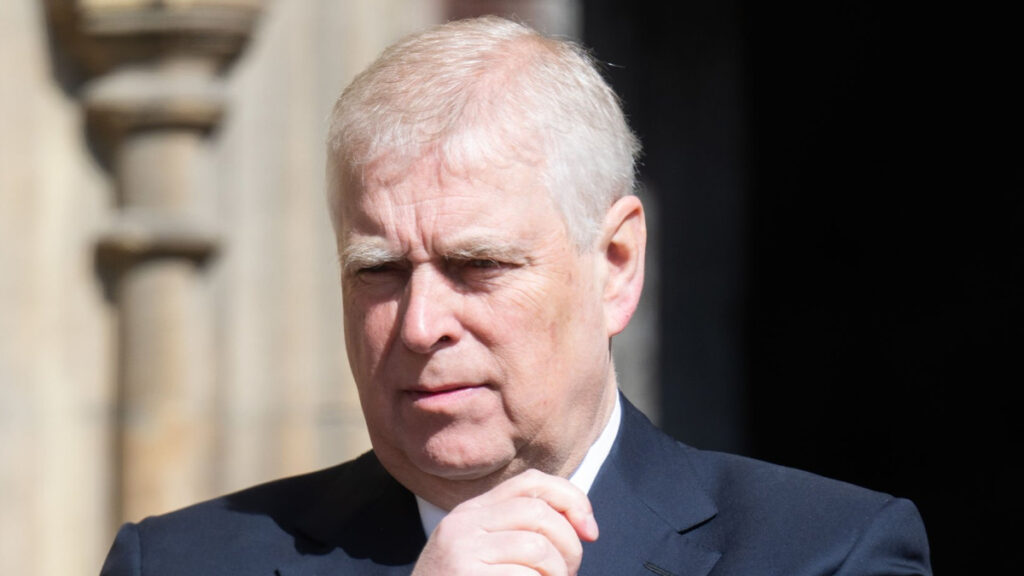
What no one will tell you about this dark Thursday is that the real thunder at Sandringham wasn’t the police arriving at Wood Farm, but the weight of history falling on the shoulders of a man who is now 66 years old and under arrest.
Watching Andrew Mountbatten-Windsor being taken into custody for “misconduct in public office” is like witnessing a collapse not seen in London since Charles I lost his head—literally—in front of Parliament in 1649.

As the former duke prepared to blow out his candles, he found himself confronted by a team of agents searching his properties in Norfolk and Berkshire—a humiliation that even the most creative protocols at Zarzuela or Buckingham Palace could not conceal.
The spell is broken: Elizabeth II’s “favorite son” has gone from being an untouchable royal to a citizen who must explain why he allegedly leaked confidential documents about Afghanistan or Vietnam to a criminal like Jeffrey Epstein.
What implications does the arrest of a King’s brother, the first in centuries, have for the Crown?
The underlying message of this arrest is a declaration of war between reality and privilege. By arresting Andrew, Thames Valley Police are not only investigating compromising emails; they are also challenging the notion that royal blood provides immunity.
Charles III, in a move that departs from the family protection his mother practiced, has let go of his brother’s hand with a cold “the law must take its course.” It’s a masterstroke of institutional survival: to keep the monarchy alive, the King has decided his brother is expendable.

If Charles I was tried for prioritizing his personal interests over the people’s freedom, Andrew now faces accusations of turning his role as a trade envoy into an information office for his shady Manhattan associates.
The comparison to the 17th century isn’t just a historical flourish; it’s a warning. Charles I was executed after a civil war that abolished the monarchy for eleven years. Today, even without the threat of violence, the Firm faces the risk of complete discredit.
Misconduct in public office is a common law offense in the United Kingdom that can carry a sentence of up to life imprisonment.

The monarch’s brother risking a prison bunk for “playing” at being a spy with commercial intelligence reports is a scenario that not even the writers of The Crown dared to imagine.
The lesson is bitter for Andrew: in the new court of Charles III, loyalty is sworn to the Constitution, not to blood ties.
What we are witnessing is the final dismantling of the “York Effect.” For decades, Andrew lived in a bubble of impunity, flying in helicopters and moving around the world with the arrogance of someone who knows they are immune.