
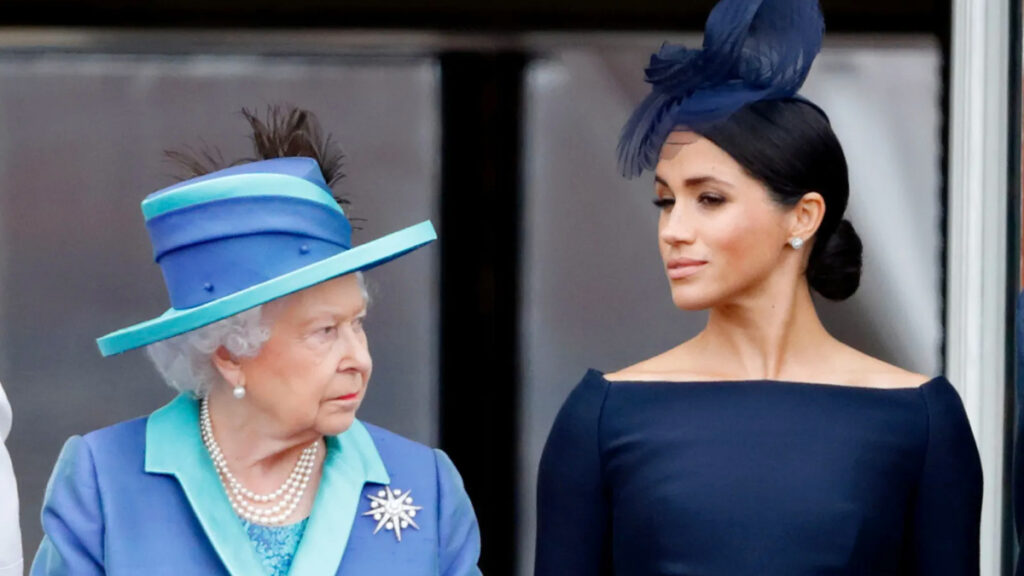
Royal author Robert Hardman has just published a book titled Elizabeth II, and one of its most talked-about passages concerns the opinion that the Queen developed about Meghan Markle over time.
According to sources close to the monarch cited by Hardman, Elizabeth came to perceive “narcissistic behavior” in Meghan, especially after the royal family’s efforts to integrate her and give her a prominent role were, in her words, “torn up.”

What makes this account interesting is the contrast with how things started. Hardman explains that the Queen went so far as to bend her own rules to welcome Meghan even before the wedding, allowing her to participate in an official event in December 2017, months before she married Harry in May 2018. She also assigned her patronages with personal significance, such as that of the National Theatre, in consideration of her background as an actress.
According to the author, these gestures were met with enthusiasm at first and then simply ignored.
At first, it was puzzling; then, it became frustrating; and in the end, those close to the Queen sensed that she had been disappointed by both of them, though more markedly by Meghan.

According to Hardman, the perception of narcissism was not immediate but came “after things had blown up.”
The interview with Oprah Winfrey in March 2021 was a turning point. Hardman notes that some at the Palace interpreted Oprah’s presence at the 2018 wedding as a retrospective sign that the public exit had been planned well in advance.
One senior adviser put it bluntly: “The business of having Oprah at the wedding now made sense.”

It is worth noting that Harry and Meghan have always maintained that their relationship with the Queen was good and close, and that Elizabeth passed away in September 2022 without being able to confirm or deny any of the allegations made against her.
Hardman also acknowledges that the Queen was “famously good at concealing her true thoughts.” All of this information comes from her inner circle, not directly from her, and it is important to keep this in mind before assuming that we know for certain what Elizabeth thought.