
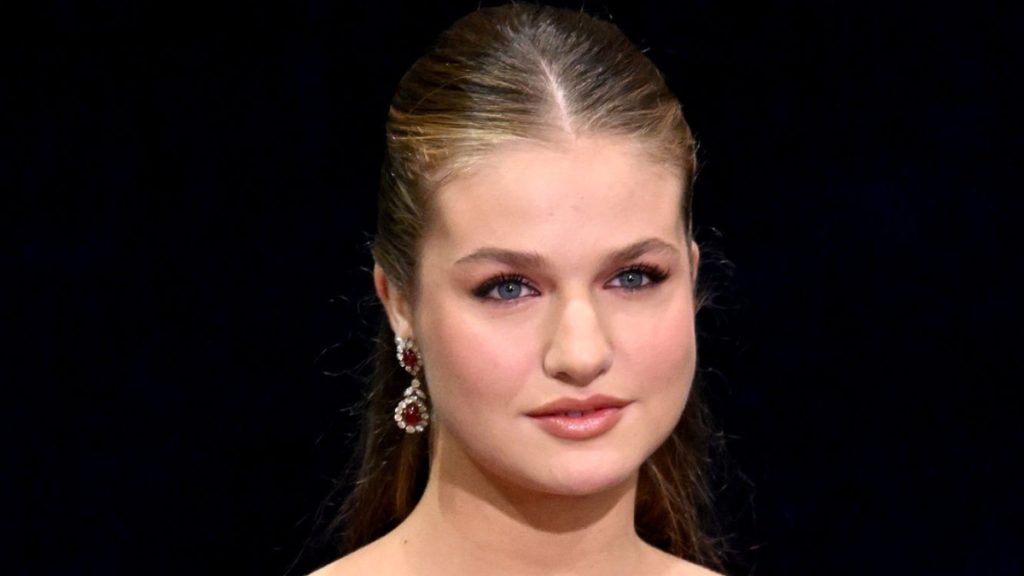
Princess Leonor began her speech in Oviedo by looking back to 1981, the year these awards were presented for the first time. That afternoon, the philosopher María Zambrano—the only woman to receive the award and someone who had spent four decades in exile—sent a note in which she spoke of a light where “the young and the unprecedented” came together.
The recipient of those words was a 13-year-old Felipe, and his daughter brought them up now to pose the question that ran through her entire speech: Does it still make sense to come to Oviedo every year to celebrate those who help us have confidence?
What did Princess Leonor say about young people?
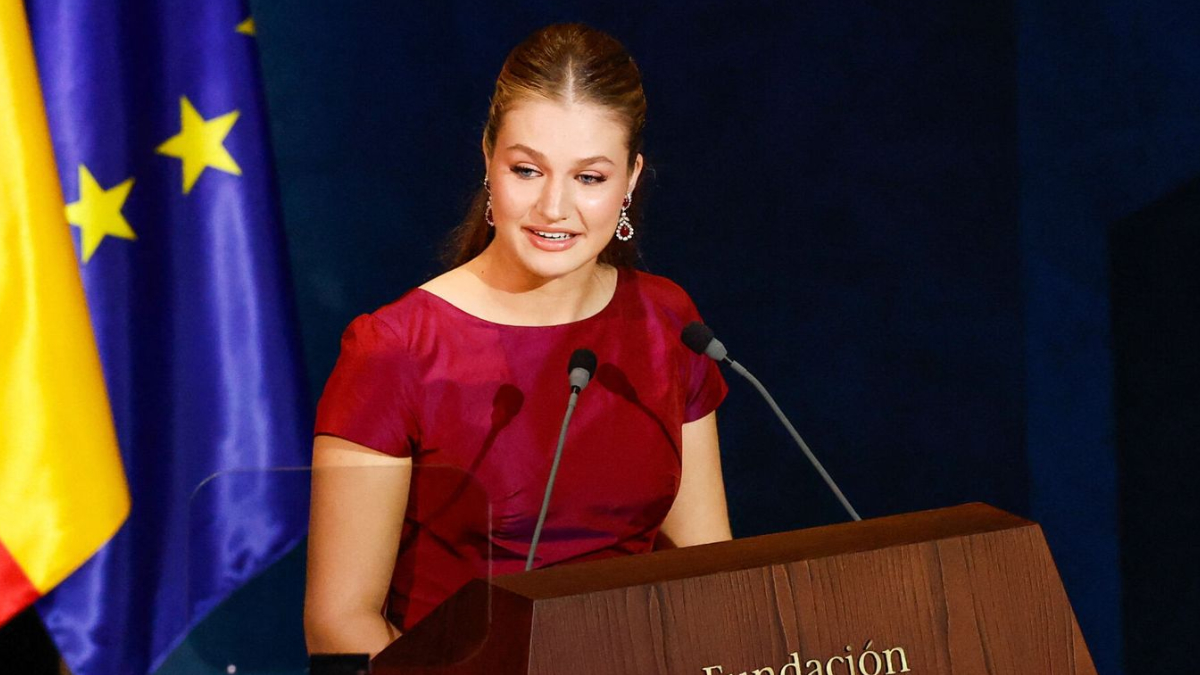
Before answering, the heiress brought up the concerns of her generation. She spoke of disillusionment, of extremism and inequality, of the noise of social media and the cost of living, and also of that widespread feeling of being unable to plan for the future, find a good job, or own a home.
She admitted to feeling both apprehensive and hopeful at the same time, and she set out to be sincere—”neither idealistic nor apocalyptic, nor cynical nor melodramatic.” Her answer to the big question was as brief as it was forceful, with a simple “He has it” that served as the linchpin of her speech.
What did Leonor say about each of the award winners?
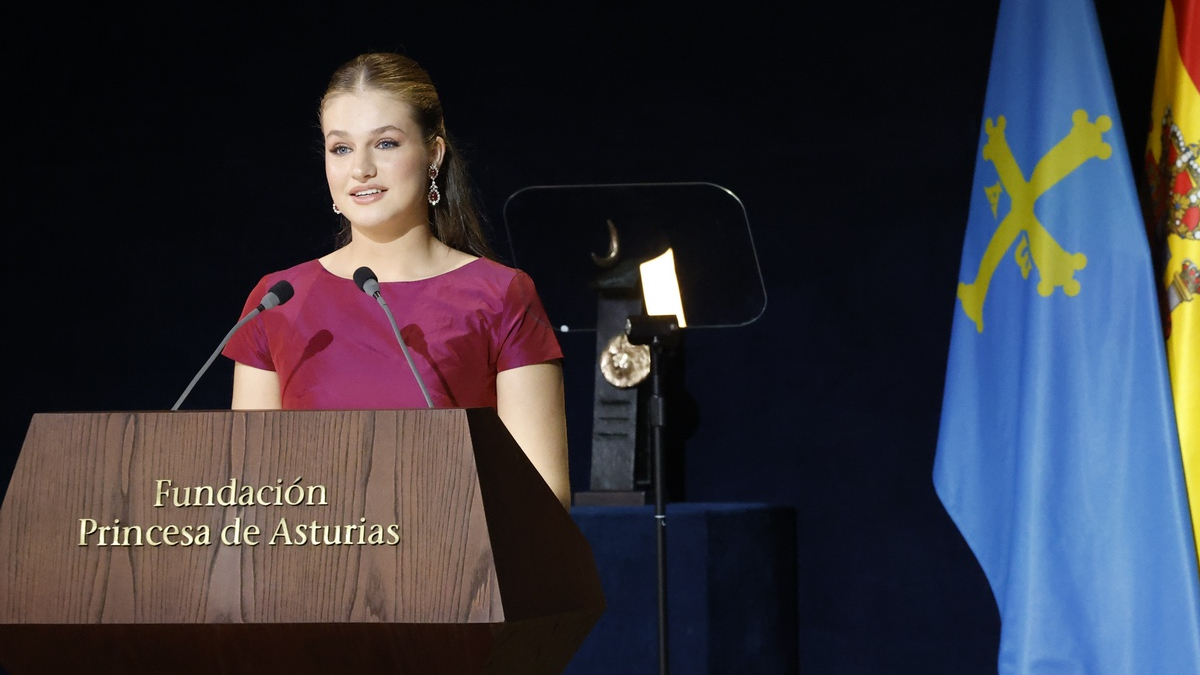
From that point on, each award winner became a key point in the argument. Timothy Garton Ash gave her an opportunity to speak about a Europe that, together with the United Kingdom, must defend its values in a world that is already post-Western. Studio Ghibli, meanwhile, allowed her to share a personal memory: the afternoon when Queen Letizia took them to see Ponyo on the Cliff by the Sea, and Sofia, not yet two years old, watched her first movie in a cinema.
She praised Julian Barnes’s memoirs, in which the writer discusses his blood cancer, and asserted that no AI will ever be able to replicate the emotional impact of his work. Messi embodied the magic of sport, the Svalbard Global Seed Vault represented international cooperation, and astronaut Christina Koch exemplified the idea that we all make up “the crew of Earth.”
She also highlighted how David Klenerman, Shankar Balasubramanian, and Pascal Mayer made DNA sequencing fast and inexpensive, and she described Patti Smith as a free-spirited artist whose authenticity deepens with the years.
How did Leonor’s speech conclude?
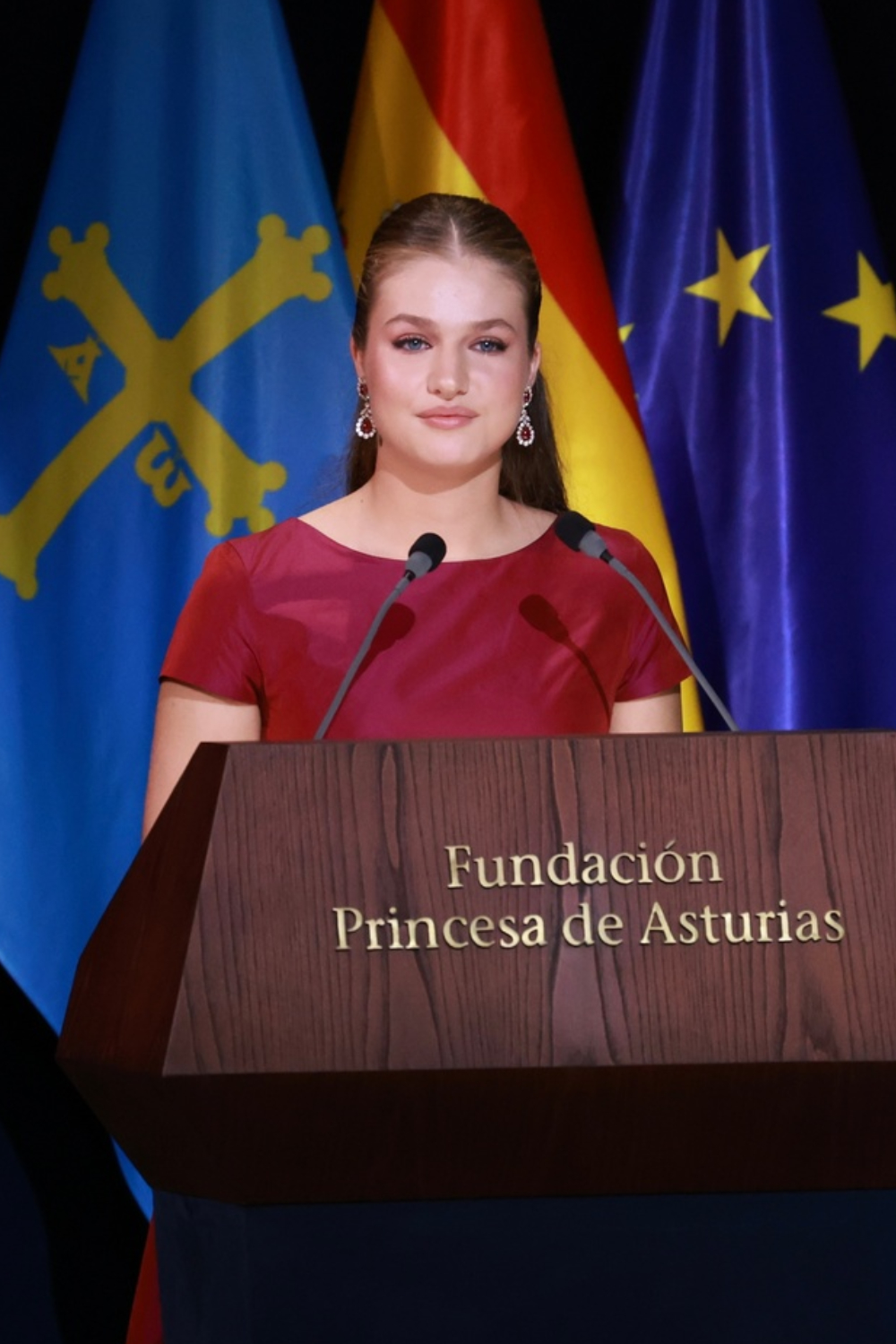
In the final part, the princess acknowledged sensing a certain discouragement around her and once again called for hope, just as she had done two years earlier with a poem by Serrat. This time, she drew on Václav Havel’s definition of hope, which holds that hope isn’t about believing everything will turn out well, but rather about knowing that there are things worth defending, no matter what happens.
And she concluded by returning to Ghibli, with the line by Paul Valéry that Miyazaki featured in one of his films: “The wind is rising… We must try to live!” The ending resonates with the girl who was mesmerized in the movie theater and makes clear where the heiress wants to direct her gaze.
Leonor’s Full Speech at the Princess of Asturias Awards
Allow me to open a window to the past. Let’s set the scene: it’s 1981, we’re on this very stage, and it’s the first-ever presentation of these awards. They announce the award for Communication and Humanities, and José Ortega Spottorno comes out, holding a small note in his hand. The note is from María Zambrano, the first—and only—woman to receive an award in the year this foundation began its journey. The philosopher and writer had been in exile for four decades. When she accepted the award, she told my father that it represented “a light being kindled, within which a presence flutters, where the young and the unprecedented come together—the hope of a history that is unfolding.”
My father is now approaching 60, but that afternoon he was 13 years old. In her words, María Zambrano was referring not only to the foundation, not only to Spain, but to that Spain of 1981. She spoke of what was young and what was new. She spoke of hope.
I bring it up again so that we can consider what it has to offer in light of the questions many of us are asking ourselves today. And I feel a mix of vertigo and excitement, because that’s just how it is: We young people ask ourselves questions. How can we maintain our enthusiasm in these times of deep social disillusionment, of disbelief and inequality, of conflicts, extremism, populism, technological and hybrid wars, liquid realities, realpolitik, threats, and uncertainty—all further amplified by social media… not to mention macroeconomic figures and the cost of living… Let us also remember that these are times of hard work and quiet dedication by many, of striving for authenticity in the face of the virtual, and of debating the value of human imperfection against the supposed perfection of machines…
How does my generation grapple with such complexity? How do we process this pace and this disenchantment—what many see as a lack of prospects and an inability to plan a life, to have a good job, to own a home…? But faced with such chaos, how can I stand before you here today in Oviedo and be sincere—neither idealistic nor apocalyptic, neither cynical nor melodramatic? How can I convey here the significance and importance of observing our award winners closely, given how they help sustain our capacity for wonder, our curiosity, and our need to trust? Because yes, we do need to trust. Are these times darker than those that came before? Does it make sense to come to Oviedo every year to thank these women and men who are sitting here today, on this stage, for having lives and bodies of work that help us to trust?
It does.
It does, because studying Timothy Garton Ash helps us understand what’s happening in Europe. Garton Ash argues that, despite what certain hegemonic actors have demonstrated, the European Union, together with the United Kingdom, now has the opportunity—in a world that is clearly post-Western—to shore up the values on which it was built. And it must do so, he insists, with a clear need to reform current practices to strengthen security and defense. “Europeanize it,” Garton Ash says, implement the Draghi report, create a single digital space, and, ultimately, find a way to align European policies with national policies to keep making progress. It therefore seems fitting to read and study this historian from Oxford, who writes as an academic and observes as a reporter, and who has rightly earned the title of “the most European of Britons.”
And consider whether it makes sense to reference the work of Studio Ghibli here. In my case, my memory goes back to the following scene: my mother takes us to see Ponyo on the Cliff by the Sea. For Sofia, it’s her first movie at a movie theater! She’s not quite two years old and is sitting on my mother’s lap. I’m completely captivated by the story. My sister manages to sit through it more or less, shifting around a bit, but she too gets swept up in the masterful and insightful animation of that studio, which has since become part of our upbringing. Because cinema educates, of course—even when it’s not intentionally trying to. And Ghibli films portray brave, warrior princesses and a deep respect for nature. Silence and contemplation matter in the universal art form that is animation, and Ghibli Studio imbues it with meticulous craftsmanship and humanism.
And I don’t know if there’s an exercise that makes more sense than reading Julian Barnes. Do it if you want to laugh, cry, break down, or get excited. All at once. He bids farewell with a memoir that is both astonishing and poignant, in which he addresses his blood cancer—and his entire life—with intelligence and skill! With imperfect memories, fragile loves, the passage of time that transforms everything, and death, which is inevitable. Barnes says he’s a melancholic optimist and a cheerful pessimist. And you can say whatever you like, because what you’re delving into, Mr. Barnes, is the most fundamental and precious aspect of human existence, and no AI will ever be able to replicate the emotion your work evokes.
And if the history of human imperfection has ever found occasions to stir people’s passions in unison, it has been through sporting achievements. I don’t know if there’s another phenomenon capable of generating that universal feeling. A single moment—the goal everyone is waiting for—that holds everything within it. That’s why it makes sense to look at Messi today and at his unparalleled career. A former Sporting player offers us an excellent definition of the Argentine soccer player: “He made the extraordinary routine, reading the game and deciding on the most effective course of action in tenths of a second, all while putting the team’s spirit ahead of his own ego.”
Preserving plant heritage and ensuring food security and crop diversity make perfect sense. And this overwhelming evidence is hidden in a mountain beneath the Arctic permafrost, preserved at -4°F (-18°C). It’s called the Svalbard Global Seed Vault, and it’s a project—originally from Norway—that relies on international cooperation and trust. This facility stores duplicate seeds from nearly 200 gene banks around the world that could be threatened by wars, floods, fires, certain political decisions, or a lack of resources—a useful and universally beneficial scientific project.
If you think you can thrive on your own, without considering anyone else, you should talk to Christina Koch. And let this physicist and engineer tell them what she saw—and, above all, what she felt—250,000 miles away from planet Earth. We share everything, we’re connected, and we’re destined to understand one another. We are “the crew of Earth.” This comes from someone who has also been the first to accomplish many feats. Because behind every NASA mission, there’s a great deal of preparation, hard work, and excellence. Effort. And it makes sense for it to be this way: it helps us understand that we are smaller than we think and less important than we believe, but always responsible for every word and action; responsible for how we navigate life each day.
Seeing how small we are on Earth from a spacecraft must be just as fascinating as observing our minute complexity through a DNA sequencer… And, after many years of research, two chemists, David Klenerman and Shankar Balasubramanian, along with a biophysicist, Pascal Mayer, have made what was once a long and expensive process fast, inexpensive, and efficient. This massive, parallel DNA sequencing makes sense because it enables progress in many areas of biomedicine, with clinical applications in infectious diseases, cancer, and rare diseases. And because this award shows that this scientific achievement, which benefits us all, was built—as so often happens—on collaboration and teamwork.
And I’ve read that Patti Smith is a poet who sings, music that overflows with poems; that she impresses with her rebelliousness, audacity, and courage; that she is free, strong, and independent; and that in her poems, her songs, and her work, she wields a raw, defiant freedom that asks no one’s permission. I’ve read that she doesn’t set out to be liked; what she wants is to exist and to experiment out of necessity, not for aesthetic reasons. As I studied the photos Mapplethorpe took of her at the Chelsea Hotel and listened to her songs, I thought I understood the importance of recognizing the nonconformist perspective of a multifaceted artist whose authenticity and life are strengthened with age.
Two years ago, I spoke of hope when I quoted a poem by Serrat. I invoke it again, precisely because I sense a certain discouragement—perhaps skepticism, perhaps indignation… Václav Havel, who also stood on this stage one day, said that hope is not the conviction that things will turn out well, but the certainty that there are things that have meaning and are worth defending, no matter what happens. So I keep answering myself: yes, it makes sense to honor these women and these men. And now, let me recall a line by Paul Valéry that Miyazaki, one of the founders of Ghibli, brought back to life in one of his works: “The wind is rising… We must attempt to live!!” Thank you very much.