
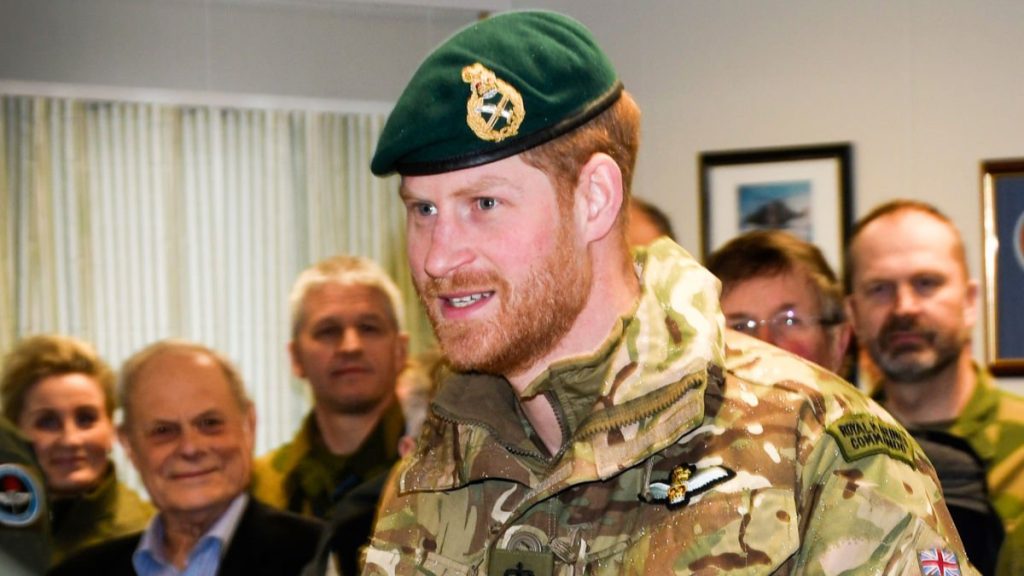
Prince Harry has a new project with Netflix, and this time it’s not about his personal life or the royal family. He and Meghan will produce a film adaptation of No Way Out, the memoirs of British Army Major Adam Jowett about a small group of soldiers besieged in Helmand Province in 2006.
The script is penned by Matt Charman, who was nominated for an Oscar for Bridge of Spies. That alone says a lot about the tone they’re aiming for: a solid, character-driven story.

The story that will be brought to the screen unfolded in Musa Qala, a town in Helmand. There, Easy Company, a combined unit of paratroopers and Rangers from the Irish Guards, was ordered to hold the district against an overwhelming Taliban offensive.
Isolated, without reinforcements, and under constant attack for over three weeks, they reached the limit of their strength in conditions Jowett describes candidly, including times when ammunition was nearly depleted and defenses were on the verge of collapsing.
Harry himself mentions Musa Qala in his memoir Spare, and not just in passing. He patrolled that area during his first tour in 2007 and 2008.

The political context of this announcement is also significant. In January, Trump publicly questioned NATO forces’ involvement in Afghanistan, suggesting they had stayed away from the front lines. The UK reacted immediately, as the country lost 457 servicemen in that conflict.
Harry responded with a statement, recalling that NATO invoked Article 5 for the first and only time in history following 9/11, and that the Allies answered that call.
Sources close to the production clarify that the film wasn’t created as a direct response to Trump, but it does reinforce Harry’s bond with all NATO soldiers who served in that theater of operations.
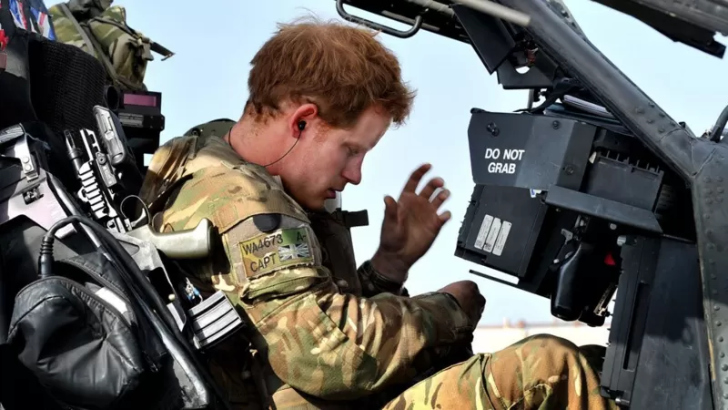
What makes this project interesting is that Harry isn’t just an outside observer. He completed two tours in Afghanistan, the first as a forward air controller and the second as a co-pilot/weapon systems operator in an Apache helicopter.
He knows that terrain from the inside, and that shows in how he talks about the conflict and why this particular story matters enough to him to produce it.