
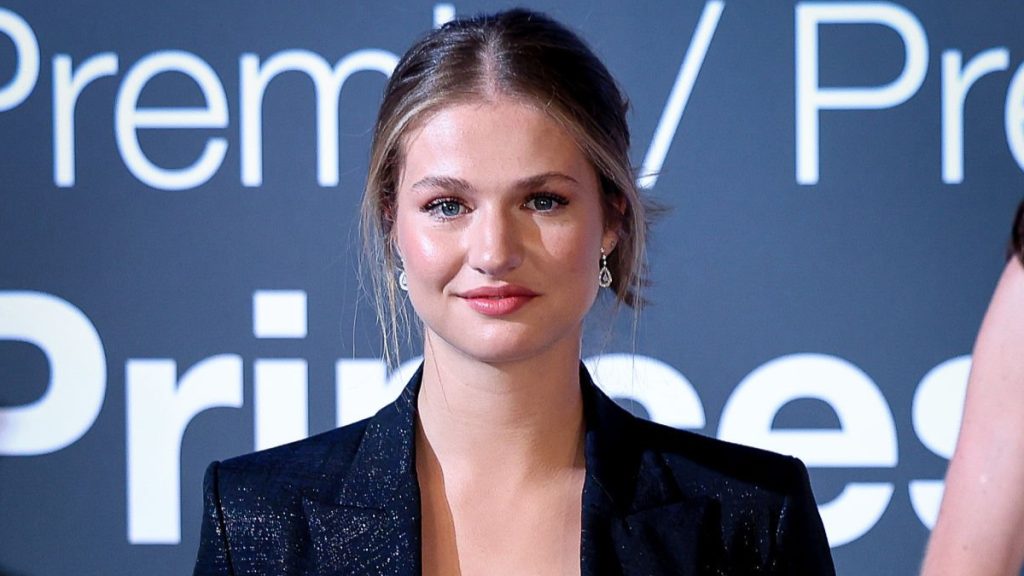
Princess Leonor will wrap up her military service and embark on a completely new chapter in September, when she begins her first year of Political Science at the Getafe campus of the Carlos III University of Madrid.
Eleven courses spread across two semesters, covering core education, institutional thought, and international analysis. For someone who comes from military academies, where everything revolves around discipline and hierarchy, the transition to a public university campus with this kind of curriculum is quite a significant shift.

The first semester starts with the basics: Fundamentals of Political Science, Theory of Law, Introduction to Sociology, and Political and Social History, along with courses in digital skills and communication.
It’s not a walk in the park, but it’s essential if you want to understand how a state works from the inside.
Interestingly, Introduction to Sociology is offered bilingually in Spanish and English, which will give Leonor the opportunity to develop technical vocabulary in both languages from the very first semester.

In the second semester, things become more specific. World Politics, which analyzes international relations, Political Actors, and Applied Statistics for the Social Sciences are introduced, with the latter also offered in a bilingual format.
These are precisely the courses where theory starts to take on a real-life dimension, as they address the very scenarios she will navigate as a head of state in the future.

The fact that statistics carry such weight in the curriculum also speaks to how politics is understood today: without data, there is no solid argument.
Eleven courses in a year isn’t an overwhelming load for any first-year student, but when viewed as a whole, the program makes perfect sense for someone with her profile. Legal foundations, social context, international reach, and communication tools—all within a single course, with English serving as a parallel working language.