

The true measure of the Spanish monarchy’s stability isn’t in the CIS approval ratings, but in the direction of Leonor’s gaze. If five years ago the heiress sought Letizia’s approval before taking every step—her mother’s famous hourglass marking the timing of every gesture—today her eyes are fixed on Felipe VI.
It’s not a lack of maternal affection; it’s a matter of hierarchy and duty. Turning 20 and donning her uniform, Leonor has transitioned from being her mother’s “little girl” to her father’s colleague in arms.
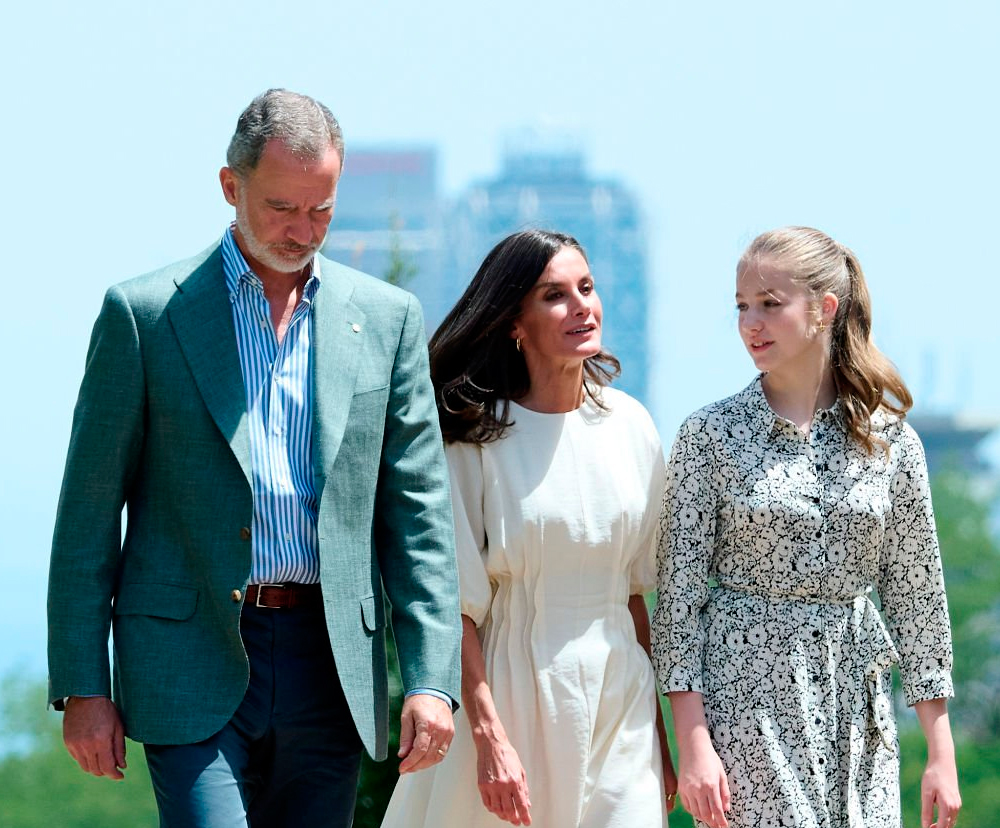
The complicity we observed in the port of Cádiz, with the King holding his phone like any overbearing parent at a school festival, reveals a level of connection they’ve achieved that Letizia, no matter how hard she tries, will never be able to match: the shared language of those who understand that the crown is heavier than it appears.
What is Princess Leonor’s relationship with her parents really like now that she’s an adult?
The Queen, who has always meticulously managed her daughters’ image, has had to learn to let go—not just of the Juan Sebastián Elcano, but of other matters as well. That sudden trip to Panama to embrace an exhausted midshipman was the definitive blow to the strict protocol.
Letizia crossed the Atlantic to offer comfort, knowing that her daughter’s military training is a bitter experience she herself did not have to endure. There is a phrase that defines this almost fierce protective bond: “Embraces that are life.”

But behind the facade of family unity lies the reality of a mother watching her “little one” become an independent entity. Letizia no longer controls the narrative; she is now a front-row spectator, whispering, “Where is my girl?” with a lump in her throat, knowing the child no longer belongs solely to the family, but to the State.
This shift of influence from mother to father has a historical precedent that the Bourbons are well aware of, though they prefer not to mention it: the shadow of Juan Carlos I and the Count of Barcelona. Unlike relationships marked by exile and mistrust, Felipe has chosen emotional coaching.

The swearing-in of the Constitution marked a turning point, as Letizia appeared unusually tense—perhaps aware that her role as a “legal guardian” had officially ended—as father and daughter exchanged knowing glances.
It’s a natural shift in precedence: Leonor is no longer a child to be guided; she’s a player on the board, beginning to make her own moves, often consulting the King before the Queen.
What awaits us in the university stage is the ultimate test of this domestic power balance. We will see a more independent Leonor, far from the walls of the Academia de Marín, navigating the freedom of a 20-year-old and the constraints of a future Head of State.

Felipe and Letizia have accomplished what seemed impossible in a royal household as tumultuous as Spain’s: making affection feel genuine, not like a staged photo in a sales catalog. They have humanized the throne through private selfies and surprise getaways, reminding us that even though Leonor is the heiress, she remains a daughter seeking comfort after months of turbulence.
The question now isn’t whether they’re united, but whether Letizia can maintain her role as a “safe haven” once Leonor begins to navigate university campuses independently, away from Zarzuela’s direct oversight.